
JAIIB Exam Date 2026, Registration, Syllabus & Preparation Strategy
If you are preparing for the JAIIB 2026 examination, the first step is not finding hundreds of study resources. The first step is to start studying with a clear and disciplined plan.
The Indian Institute of Banking & Finance (IIBF) conducts JAIIB through four papers:
- Indian Economy & Indian Financial System (IE & IFS)
- Principles & Practices of Banking (PPB)
- Accounting & Financial Management for Bankers (AFM)
- Retail Banking & Wealth Management (RBWM)
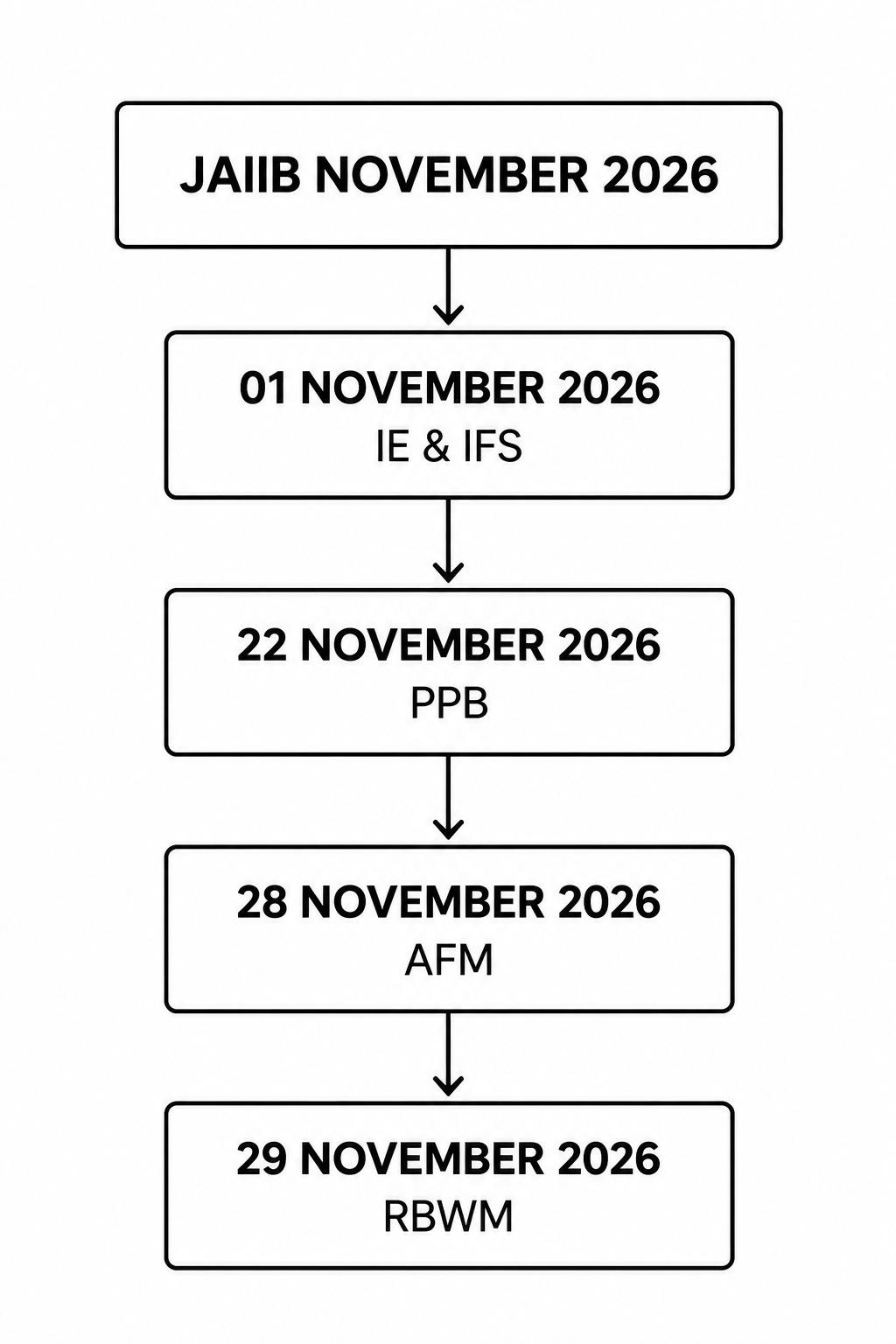
For the November 2026 cycle, the official IIBF examination schedule lists the four papers on 1 November, 22 November, 28 November and 29 November 2026.
But knowing the JAIIB Exam Date 2026 is only the beginning.
The bigger question is:
How should you prepare for JAIIB in a simple, structured and exam-oriented way?
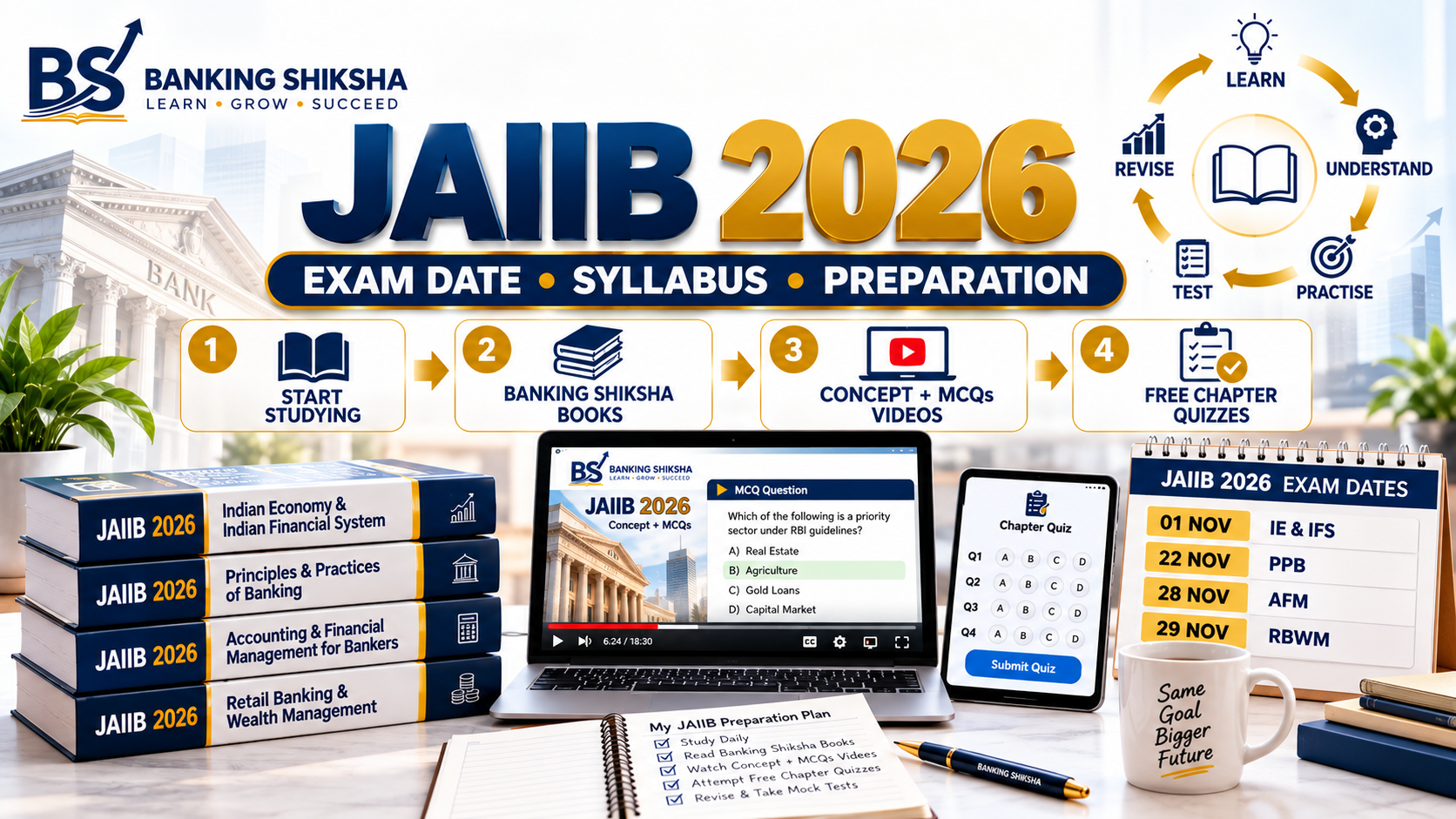
At Banking Shiksha, we recommend following a simple four-step preparation system:
Start Studying → Learn from Banking Shiksha Books → Watch Concept + MCQs Videos → Attempt Free Chapter-wise Quizzes
Repeat this process consistently for every chapter and every subject.
JAIIB Exam Date 2026
According to the official IIBF examination schedule for FY 2026–27, the November 2026 JAIIB examination dates are:
| JAIIB Paper | Examination Date |
|---|---|
| Indian Economy & Indian Financial System (IE & IFS) | 1 November 2026 |
| Principles & Practices of Banking (PPB) | 22 November 2026 |
| Accounting & Financial Management for Bankers (AFM) | 28 November 2026 |
| Retail Banking & Wealth Management (RBWM) | 29 November 2026 |
The four examinations are spread across November, giving candidates some time between papers for revision and focused preparation.
Candidates should always verify the latest official IIBF notices because
examination schedules and administrative details can be updated.
JAIIB Registration 2026
The registration schedule is separate from the examination dates.
For the November 2026 examination, IIBF announced that JAIIB/DB&F registration commenced on 12 August 2026. IIBF subsequently extended the registration deadline to 6 September 2026.
Therefore, candidates preparing for a future examination cycle should always check the latest registration announcement directly from IIBF rather than relying on an old article or social-media post.
The general registration process involves logging into the IIBF candidate/member portal, selecting the examination and subjects, completing the required details and paying the applicable examination fee.
Important
Do not confuse:
Exam Date
with
Registration Date
The registration window normally closes well before the examination itself.
So candidates should make it a habit to check the official IIBF website when a new examination cycle is announced.
JAIIB Exam Pattern 2026
Understanding the examination pattern is important before beginning your preparation.
According to the current IIBF JAIIB rules, there are four compulsory papers. The examination uses objective-type questions, with approximately 100 questions for 100 marks in each subject. The duration is two hours and the current rules specify no negative marking for wrong answers.
| Feature | JAIIB 2026 |
|---|---|
| Number of Papers | 4 |
| Question Type | Objective / MCQ |
| Questions | Approximately 100 per paper |
| Maximum Marks | 100 |
| Duration | 2 Hours |
| Mode | Online |
| Negative Marking | No |
| Papers | IE & IFS, PPB, AFM, RBWM |
Passing Criteria
The IIBF rules state that a candidate needs a minimum of 50 marks out of 100 in a subject to pass it. The rules also provide an aggregate route where a candidate securing at least 45 marks in each subject and 50% aggregate marks in a single attempt can be declared to have completed the examination.
Candidates should always refer to the latest IIBF rules because examination policies can change.
JAIIB Syllabus 2026
The JAIIB syllabus consists of four papers. IIBF’s 2026 rules and syllabus document identifies these four subjects:
1. Indian Economy & Indian Financial System — IE & IFS
This paper covers the Indian economy and financial system, including areas such as:
- Indian economic architecture
- Sectors of the Indian economy
- Economic reforms
- Globalisation
- Infrastructure
- MSMEs
- Financial architecture
- Banking structure
- RBI
- Financial institutions
- NBFCs
- Financial markets
- Money market
- Capital market
- Forex market
- Mutual funds
- Insurance
- Pension funds
2. Principles & Practices of Banking — PPB
PPB focuses heavily on practical banking knowledge.
Major areas include:
- Banker-customer relationship
- KYC and AML
- Deposit accounts
- Clearing
- Cash management
- NRI banking
- Loans and advances
- Credit management
- Recovery
- Customer service
- Digital banking
- Banking technology
- Risk and compliance-related concepts
3. Accounting & Financial Management for Bankers — AFM
AFM covers accounting as well as financial-management concepts.
Important areas include:
- Accounting principles
- Journal and ledger
- Trial balance
- Bank reconciliation
- Depreciation
- Final accounts
- Banking company accounts
- Cash flow
- Financial ratios
- Financial mathematics
- Interest and annuities
- Forex arithmetic
- Cost of capital
- Capital investment decisions
- Working capital
- Derivatives
- Taxation
- GST
4. Retail Banking & Wealth Management — RBWM
RBWM focuses on retail banking and wealth-management concepts.
Important areas include:
- Retail banking
- Retail banking business models
- Customer requirements
- Product development
- Retail liability products
- Retail credit
- Credit scoring
- Recovery
- Marketing of banking products
- Customer relationship management
- Wealth management
- Investment-related concepts
The detailed syllabus should always be checked against the latest official IIBF document because IIBF describes the syllabus as indicative and notes that questions may also cover relevant matters and current developments.
JAIIB Preparation Strategy 2026
Now comes the most important part.
Many JAIIB aspirants make the same mistake: they keep collecting study material but don’t actually start studying.
You don’t need ten different books, dozens of Telegram PDFs and countless random videos.
You need a structured study process.
At Banking Shiksha, we recommend following these four steps.
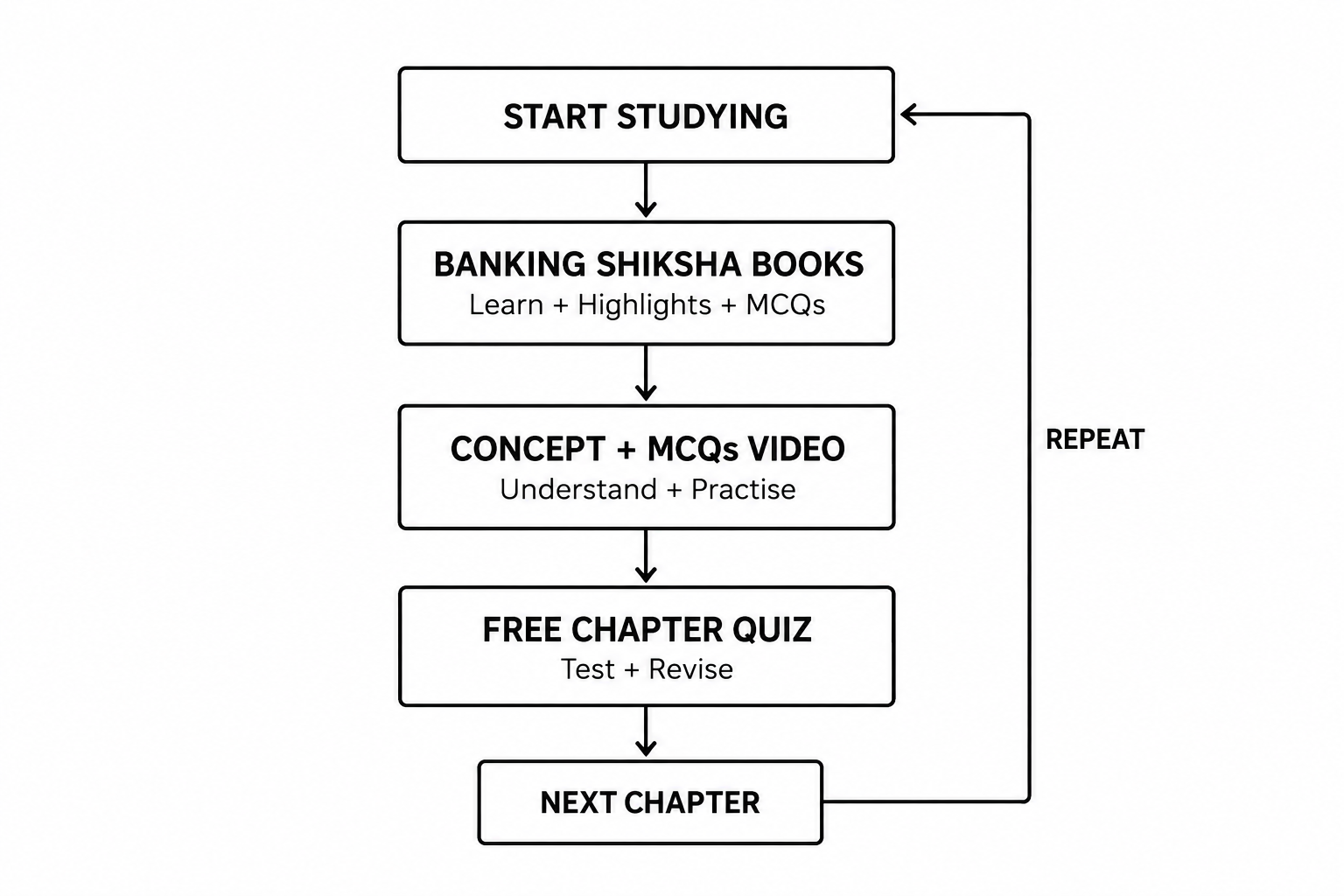
Let’s understand each step.
Step 1 — Start Studying
This sounds simple, but it is actually the most important step.
Before searching for the “best book”, “best teacher” or “best strategy”, sit down and start studying.
Set aside a fixed amount of time every day.
You don’t necessarily need to study for eight or ten hours.
A working banking professional can start with a realistic daily routine such as:
| Activity | Suggested Time |
|---|---|
| Chapter study | 60–90 minutes |
| Concept + MCQ video | 30–60 minutes |
| MCQ practice | 20–30 minutes |
| Revision | 15–20 minutes |
The exact timing can vary according to your job and personal schedule.
The important thing is consistency.
Don’t study for six hours on Sunday and then do nothing for the next four days.
A smaller daily study session, repeated consistently, can create much better preparation momentum.
Step 2 — Study from Banking Shiksha Books
Once you have started studying, use a structured source that covers the syllabus without unnecessary information.
The Banking Shiksha JAIIB books are designed around this approach.
The objective is simple:
Cover the JAIIB syllabus in a clear, understandable and exam-oriented manner without unnecessarily adding unrelated information.
The books are structured to help you understand the chapter first and then revise and practise what you have learned.
What you get in the Banking Shiksha books
Each chapter is designed with useful exam-preparation elements such as:
Complete chapter coverage
The objective is to cover the required JAIIB syllabus systematically.
Simple explanations
Complex banking and financial concepts are explained in an easier learning format.
Main Highlights
At the end of each chapter, important points are brought together in a Main Highlights section.
This makes revision faster when you don’t have enough time to read the entire chapter again.
Exam-Oriented MCQs
Each chapter also contains exam-oriented MCQs with explanations so that you can test your understanding after completing the chapter.
Recommended Study Flow
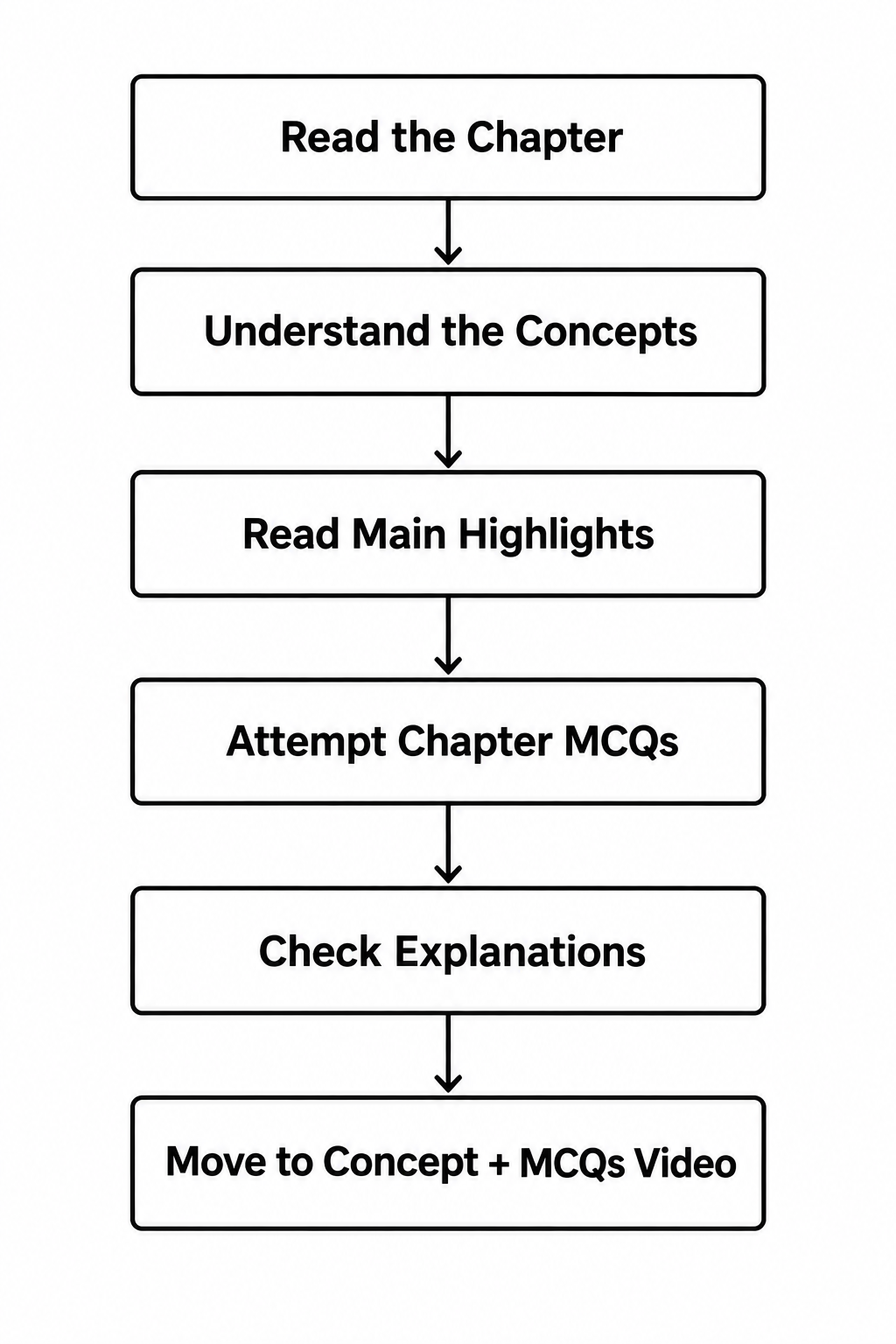
You can explore the available JAIIB study material and resources on the Banking Shiksha website here:
JAIIB Study Material – Banking Shiksha
Step 3 — Watch Banking Shiksha Concept + MCQs Series
Reading the book gives you the foundation.
The next step is to watch the Banking Shiksha Concept + MCQs video series.
The purpose of this series is not simply to provide a list of questions.
The focus is on:
Concept + Important MCQs + Explanation
The videos are designed to take you through the chapter concepts and then connect those concepts with exam-oriented questions.
This can help you understand why an answer is correct, rather than simply memorising an option.
What the Concept + MCQs Series Covers
The series is designed around:
- Chapter concepts
- Important JAIIB concepts
- Exam-oriented MCQs
- Latest-pattern-oriented practice
- Previous-year-question-based learning where appropriate
- Detailed explanations
- Conceptual understanding
Banking Shiksha’s YouTube channel describes its educational content as covering the JAIIB syllabus, concept clarity, revision, quizzes and MCQs for banking professionals and JAIIB aspirants.
Watch the Banking Shiksha JAIIB Videos
Banking Shiksha YouTube Channel
Step 4 — Attempt Free Chapter-wise Quizzes
After studying the chapter from the book and watching the corresponding Concept + MCQs video, the next step is revision through practice.
This is where the free JAIIB quizzes on Banking Shiksha can be useful.
The idea is simple:
Study → Watch → Test Yourself
Don’t just watch a video and move on.
Attempt questions.
If you get an answer wrong, return to the relevant concept.
Your Chapter Revision Cycle
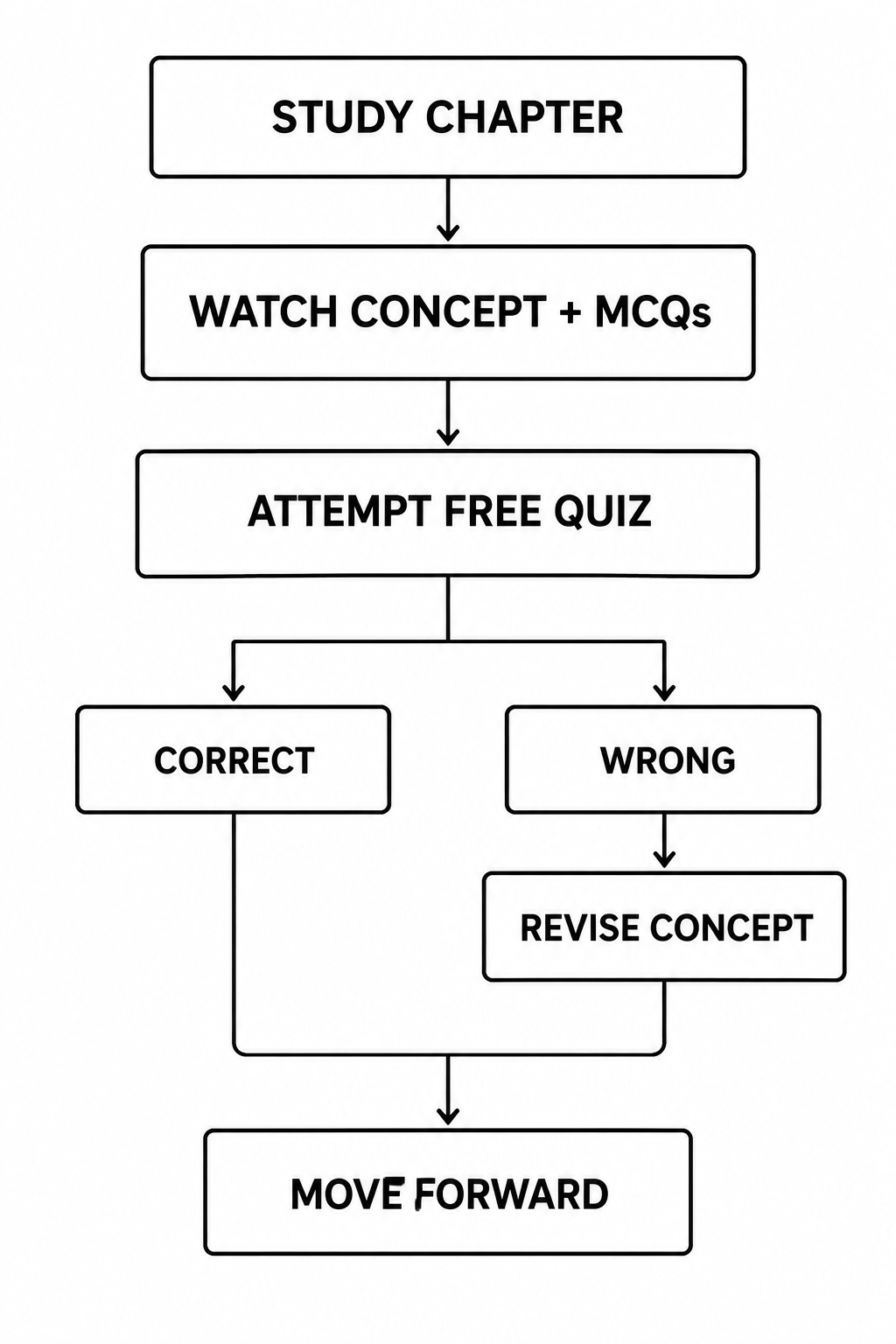
Access the free JAIIB quizzes here:
Free JAIIB Quizzes – Banking Shiksha
The Complete Banking Shiksha JAIIB Preparation Method
If you combine all four steps, your preparation becomes much simpler.
Step 1
Start studying.
Step 2
Study the complete chapter from Banking Shiksha JAIIB books.
Focus on understanding the chapter, reviewing the Main Highlights and attempting the exam-oriented MCQs with explanations.
Step 3
Watch the corresponding Banking Shiksha Concept + MCQs video.
Use the video to strengthen your understanding and practise important MCQs and relevant previous-year-question-based concepts.
Step 4
Attempt the free chapter-wise quiz.
Use your quiz performance to identify weak areas.
Then repeat.
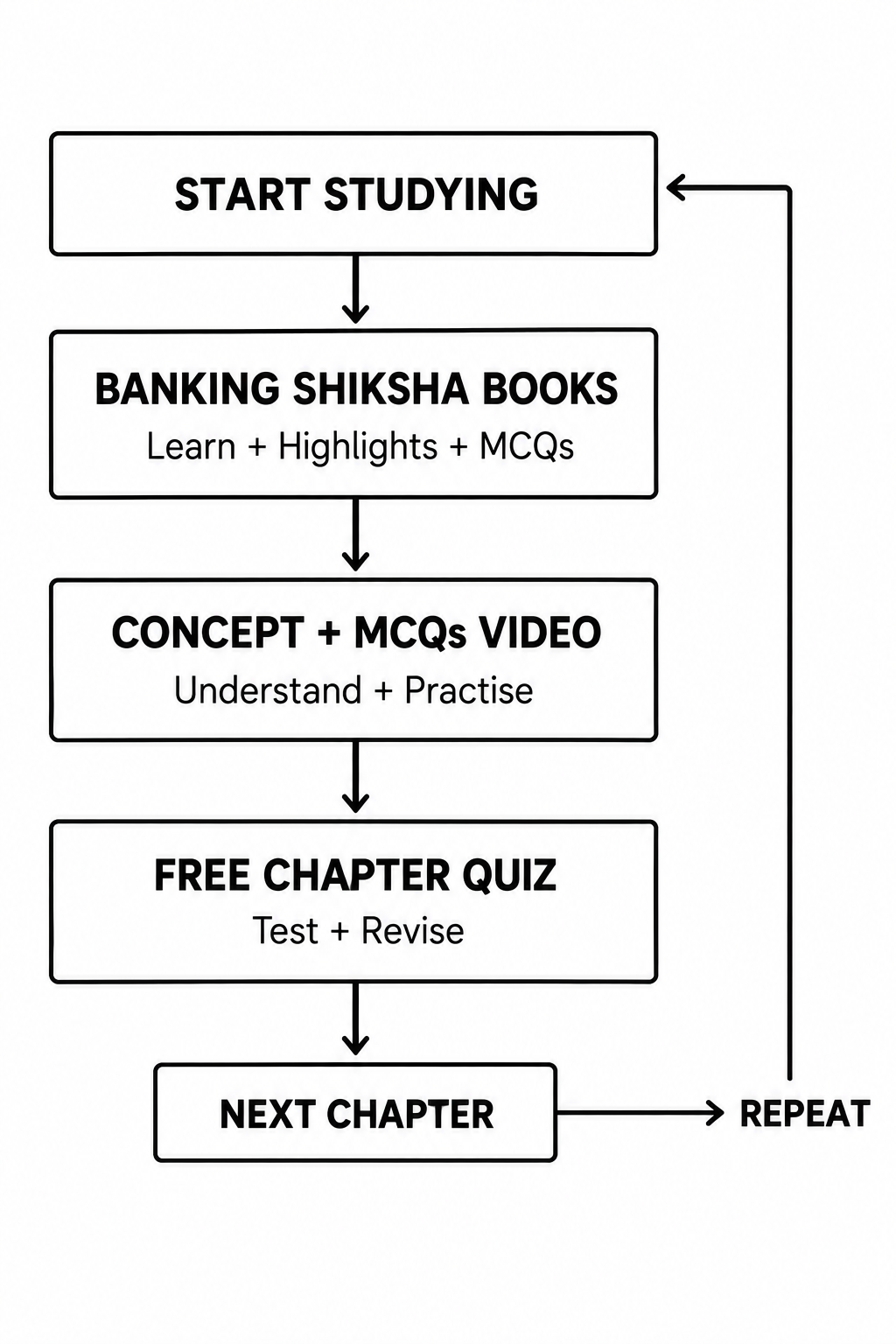
This is the complete learning cycle.
Why This Approach Can Be Useful
The biggest advantage of following one structured system is that you are not constantly switching between resources.
Instead, every chapter goes through four stages:
| Stage | Purpose |
|---|---|
| Banking Shiksha Book | Learn the complete chapter |
| Main Highlights | Quick revision |
| Concept + MCQs Video | Strengthen concepts and question-solving |
| Free Quiz | Test understanding and identify weak areas |
This creates a continuous loop of:
Learn → Understand → Practise → Test → Revise
And then:
Repeat with Discipline.
How to Prepare All Four JAIIB Papers
Don’t assume that the same study approach will feel identical for every paper.
IE & IFS
Give importance to conceptual understanding, financial-system concepts, economic concepts and important factual areas.
PPB
Connect theoretical concepts with practical banking operations.
AFM
Give additional attention to numerical concepts and formulas. Practice is essential.
RBWM
Focus on concepts, products, customer-related topics, wealth-management concepts and exam-oriented questions.
The IIBF syllabus also notes the professional nature of the examination and advises candidates to prepare beyond simply memorising the listed syllabus headings; relevant current developments may also be tested.
Don’t Ignore Revision
One of the biggest mistakes in exam preparation is studying a chapter once and assuming it is finished.
A chapter is not truly finished until you can recall its important concepts and solve questions from it.
Use the Banking Shiksha Main Highlights, MCQs, videos and free quizzes for repeated revision.
A simple revision cycle can be:
First Revision: within a few days
Second Revision: after completing the module
Third Revision: during final preparation
The exact schedule can be adjusted according to your exam date and preparation speed.
What Should You Do If You Have Less Time?
Don’t panic.
Instead, stop collecting new resources and focus on the same preparation cycle.
Limited-time strategy:
1. Study the chapter
↓
2. Read Main Highlights
↓
3. Watch Concept + MCQs video
↓
4. Attempt the free quiz
↓
5. Review mistakes
↓
6. Move to the next chapter
This keeps your preparation focused.
JAIIB Preparation Is About Discipline
There is no shortcut that replaces studying.
You can have:
- the best book
- hundreds of MCQs
- dozens of videos
- mock tests
- revision notes
But if you don’t sit down and study consistently, these resources cannot prepare you by themselves.
Therefore, the first step in the Banking Shiksha preparation system is deliberately simple:
Start Studying.
Then use the resources systematically.
Books → Videos → Quizzes → Revision
Repeat the process.
Final JAIIB Preparation Checklist
Before moving from one chapter to the next, ask yourself:
☐ Have I read the complete chapter?
☐ Do I understand the important concepts?
☐ Have I revised the Main Highlights?
☐ Have I attempted the chapter MCQs?
☐ Have I watched the relevant Concept + MCQs video?
☐ Have I attempted the free chapter quiz?
☐ Did I review my incorrect answers?
If the answer is yes, move to the next chapter.
Final Takeaway
Preparing for JAIIB does not have to mean collecting unlimited study resources.
Build a routine and follow one structured process.
Your JAIIB Preparation Formula
STEP 1 — START STUDYING
Sit down, create a daily routine and begin.
STEP 2 — STUDY FROM BANKING SHIKSHA BOOKS
Cover the complete syllabus in a structured way, use the Main Highlights for quick revision and practise the exam-oriented MCQs with explanations.
STEP 3 — WATCH BANKING SHIKSHA CONCEPT + MCQs SERIES
Strengthen your understanding of every chapter through concepts, important MCQs and relevant previous-year-question-based practice.
STEP 4 — ATTEMPT FREE CHAPTER-WISE QUIZZES
Test yourself, identify weak areas and revise them.
Then repeat the same process for the next chapter.
Study → Learn → Practise → Test → Revise → Repeat.
For official examination dates, rules and syllabus updates, always verify the latest information published by IIBF. The Institute’s official 2026 rules and notices remain the primary source for examination-related information.
Start your JAIIB preparation with Banking Shiksha
JAIIB Study Material: https://bankingshiksha.com/jaiib-study-material/
Free JAIIB Quizzes: https://bankingshiksha.com/jaiib/jaiib-free-quizzes/
Banking Shiksha YouTube Channel
Remember: Don’t keep searching for the perfect strategy. Start studying, follow the process and repeat it with discipline.
JAIIB 2026 Book Samples
Preview the Quality Before You Buy
-
Free Sample Books
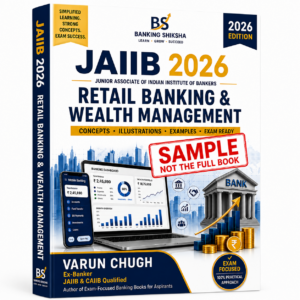
JAIIB 2026 – Retail Banking & Wealth Management (RBWM) | Free Sample
₹0 Add to cartRated 5.00 out of 5
Featured JAIIB 2026 Books
-
JAIIB Book Combo
JAIIB 2026 Complete 4-Book Combo – RBWM + PPB + AFM + IE & IFS
₹2,799Original price was: ₹2,799.₹1,199Current price is: ₹1,199. Add to cart -
JAIIB Books
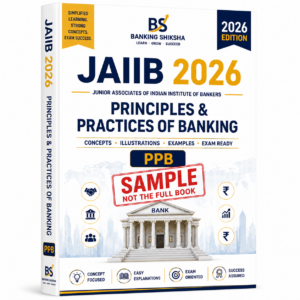
JAIIB 2026 Principles & Practices of Banking (PPB) PDF Book
₹999Original price was: ₹999.₹499Current price is: ₹499. Add to cart -
JAIIB Books
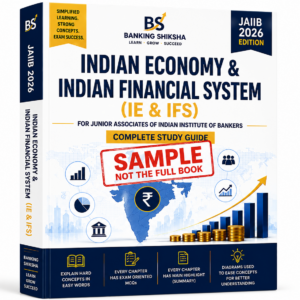
JAIIB 2026 Indian Economy and Indian Financial System (IE & IFS) PDF Book
₹799Original price was: ₹799.₹399Current price is: ₹399. Add to cart -
JAIIB Books
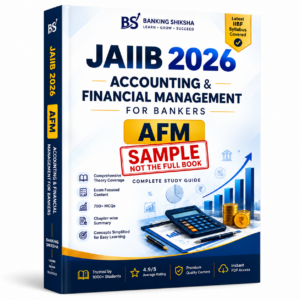
JAIIB 2026 Accounting & Financial Management (AFM) PDF Book
₹799Original price was: ₹799.₹399Current price is: ₹399. Add to cart -
JAIIB Books
JAIIB 2026 Retail Banking & Wealth Management (RBWM) PDF Book
₹799Original price was: ₹799.₹399Current price is: ₹399. Add to cart


Free Learning Resources
Everything you need to start your JAIIB preparation — completely FREE.